Tattoo Pain Chart: What Hurts Most (and Least) by Placement
Tattoo pain depends on three things: skin thickness, bone proximity, and nerve density. Fleshy areas of the outer arm, calf, outer thigh score lowest (2–4/10) thanks to natural padding. Bony areas, ribs, sternum, spine, inner wrist, and kneecaps score highest (7–9/10), since the needle sits close to bone and dense nerve clusters. Style matters too: blackwork's extra needle passes can make a spot hurt roughly twice as long as the same placement in fine line. At M. INK Tattooing in Winnipeg, artist Mckala Farrell and the team map out placement-specific pain during every consultation.
Whether you're a first-timer or adding to an existing sleeve, knowing pain by placement helps you decide with confidence. See our complete Winnipeg tattoo guide for the full process overview.
How Does Tattoo Pain Actually Work?
Pain during a tattoo comes down to three anatomical variables:
- Skin thickness thinner skin transmits more needle sensation directly
- Proximity to bone placements over bone (ribs, sternum, ankles, spine) register as sharper, more intense pain
- Nerve ending density areas like the inner wrist, ribs, and armpit have roughly double the pain receptor concentration of the outer arm or calf
Thin-skinned areas close to bone transmit needle vibration almost directly to bone-adjacent nerve endings, which the brain registers as sharp, high-intensity pain. Fleshy areas with a fat and muscle buffer, like the outer thigh or upper arm, absorb much of that vibration before it reaches deeper nerve clusters which is why they consistently score 2–4/10 versus 7–9/10 for bony placements. This is also the anatomical reason a rib tattoo can feel roughly twice as intense as the same design placed on the outer thigh, even at identical needle depth and speed.
Sensation type also varies by placement: fleshy areas tend to produce a dull, vibrating buzz, while bony areas produce sharper, more localized burning. Understanding which sensation to expect helps first-timers mentally prepare something M. INK covers in every consultation. For a broader walkthrough of what to expect at your first session, see the first tattoo preparation guide.
Tattoo Pain Chart Every Body Placement Ranked
Pain by placement generally falls into four bands: low (2–4/10), medium (4–6/10), high (6–8/10), and extreme (8–10/10). Low-pain zones of the outer arm, calf, thigh are popular first-tattoo spots precisely because the fat and muscle padding dull sensation. Medium-pain zones like the upper back and bicep involve more nerve density but still have moderate padding. High-pain zones (ribs, spine, inner wrist) sit over bone with minimal cushioning. Extreme-pain zones kneecaps, elbow ditch, armpit, feet combine thin skin, bone proximity, and high nerve density, which is why M. INK artists often recommend breaking these into shorter multi-session bookings rather than single long sits.
| Body Placement | Pain Level (1–10) | Healing Difficulty | Best Tattoo Style | Session Time |
|---|---|---|---|---|
| Outer upper arm | 2–3 | Low | Any style | 1–3 hrs |
| Calf | 2–3 | Low | Blackwork, colour | 1–4 hrs |
| Outer thigh | 2–3 | Low | Large scale, blackwork | 2–5 hrs |
| Shoulder | 3–4 | Low | Any style | 1–3 hrs |
| Forearm (outer) | 3–4 | Low | Fine line, colour | 1–3 hrs |
| Upper back | 4–5 | Medium | Large scale, blackwork | 2–6 hrs |
| Bicep | 4–5 | Medium | Any style | 1–2 hrs |
| Hip | 4–6 | Medium | Fine line, script | 1–2 hrs |
| Chest (flat area) | 5–6 | Medium | Blackwork, fine line | 1–3 hrs |
| Inner forearm | 5–6 | Medium | Fine line | 1–2 hrs |
| Collarbone | 6–7 | High | Fine line, script | 1–2 hrs |
| Ankle | 6–7 | High | Fine line, small colour | 0.5–1.5 hrs |
| Inner wrist | 7–8 | High | Fine line | 0.5–1 hr |
| Spine | 7–8 | High | Fine line, script | 1–2 hrs |
| Ribs | 8–9 | High | Any style, shorter sittings recommended | 1–2 hrs |
| Sternum | 8–9 | High | Fine line | 0.5–1.5 hrs |
| Armpit | 8–9 | Extreme | Small designs only | 0.5–1 hr |
| Elbow ditch | 8–9 | Extreme | Fine line, small designs | 0.5–1 hr |
| Kneecap | 8–9 | Extreme | Small designs only | 0.5–1 hr |
| Feet/toes | 8–10 | Extreme | Fine line, small colour | 0.5–1.5 hrs |
For placements in the high or extreme range, healing discomfort tends to run longer too see M. INK's tattoo aftercare guide for what to expect during recovery on sensitive spots like ribs or feet.
Not sure which placement suits your pain tolerance? M. INK artists evaluate placement, style, and session pacing during every consultation so you know exactly what to expect before you sit down. Submit your consultation form →
Does Tattoo Style Affect How Much It Hurts?
Style changes pain mainly through needle pass count and pressure, not just placement. Blackwork and solid fill require 3–5 passes per section to achieve full saturation, which means cumulative time-on-skin and therefore cumulative pain runs higher, especially over bony areas. Fine line work uses a single lighter pass, which can reduce sensation by roughly 30–40% compared to solid blackwork in the same spot, though thin needles on sensitive areas like the inner wrist can still feel sharp. Colour tattoos often need multiple passes per section (once for line work, again for saturation, sometimes a third for shading), landing pain-wise between fine line and heavy blackwork. Hand poke methods are slower and use lighter pressure per dot, which some clients find less intense moment-to-moment, though total session time and total pain exposure tends to run longer.
| Style | Pain Level (relative) | Passes per Section | Best For | Typical Session Time |
|---|---|---|---|---|
| Fine line | Lower | 1 | Detail work, script, small pieces | Shorter |
| Colour | Medium | 2–3 | Portraits, illustrative work | Medium |
| Blackwork/solid fill | Higher | 3–5 | Large scale, bold designs | Longer |
| Hand poke | Lower intensity, longer duration | Multiple light dots | Minimalist, fine detail | Longest |
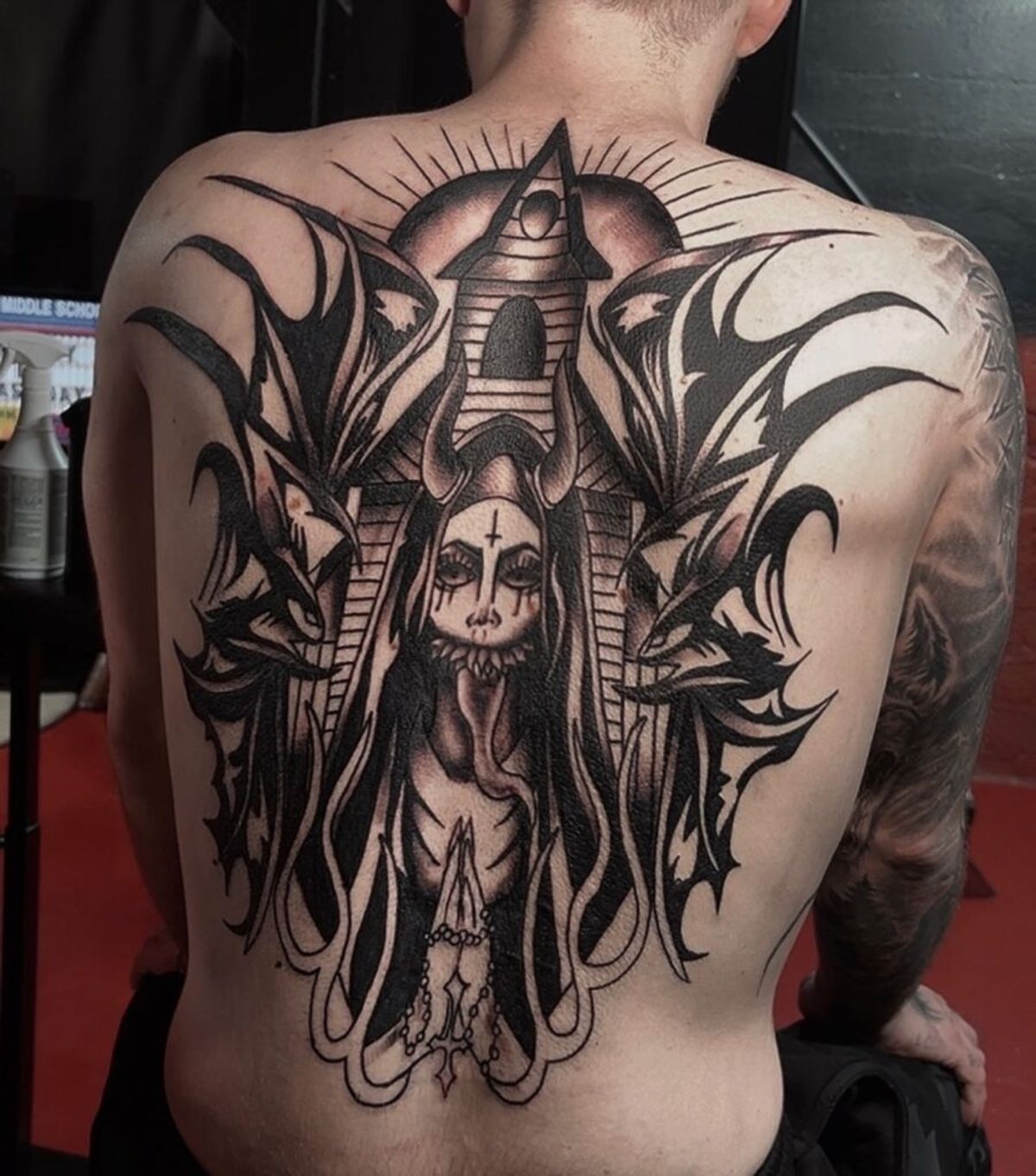
Mckala Farrell specializes in heavy blackwork and large-scale pieces, while Violet focuses on detail-oriented fine line work both factoring style-specific pain into how they pace sessions.
Choosing between blackwork and fine line? The pain difference is real, but so is the visual impact. Talk through both with your artist and find the approach that fits your concept and your comfort level. Start with a consultation →
How Do You Manage Tattoo Pain During Your Session in Winnipeg?
Pain management isn't an afterthought at M. INK Tattooing it's built into how sessions are planned from the consultation process (link when published) onward, including realistic time estimates for high-pain placements. Here's what works:
Practice box breathing (4-4-4-4 pattern) 30 minutes before your session. Activates the parasympathetic nervous system, which can measurably reduce perceived pain intensity.
Avoid caffeine for at least 12 hours prior. Caffeine raises heart rate and nerve sensitivity, which can amplify how sharp the sensation feels.
Eat a full meal 2 hours before your appointment. Stable blood sugar prevents lightheadedness, which can otherwise make pain feel more intense.
Stay hydrated the day before and morning of. Well-hydrated skin takes ink more evenly and tends to be less reactive to needle trauma.
Wear loose, placement-appropriate clothing. Reduces friction and pressure on freshly worked skin, minimizing secondary discomfort during the session.
Ask your artist about pacing breaks every 30–45 minutes for high-pain placements. Short breaks let nerve receptors reset, which can noticeably reduce cumulative discomfort over long sits.
Bring headphones or a distraction. Shifting attention away from the sensation is a well-documented way to reduce perceived pain.
In Winnipeg's colder months, warm up the placement area before arriving at the studio. Cold skin is more reactive to needle trauma. If you're heading to M. INK's Main Street studio from Osborne Village or St. Vital in January, give yourself time to warm up indoors before the session starts cold, tight skin is harder to work with and more sensitive to the needle.
What M. INK Artists Tell First-Timers About Tattoo Pain
Ribs, inner wrist, and spine remain the placements clients ask about most before booking and the ones M. INK spends the most consultation time discussing, since realistic expectations make the actual session go more smoothly. Clients coming from across Winnipeg, the North End, the Exchange District, Transcona, and beyond bring the same questions, and the answer is always honest: some placements hurt more, but the right pacing and preparation make a significant difference.
Whether you're planning a small fine-line piece on the wrist or a full rib panel in blackwork, M. INK's artists walk through pain, pacing, and healing before you ever sit in the chair. M. INK Tattooing operates under Manitoba Health tattoo facility guidelines and uses only Health Canada-approved inks and sterilization protocols because safety and comfort start with the basics.
Your Placement. Your Style. Your Pace.
Every tattoo at M. INK starts with a conversation where we walk through pain expectations, session timing, and aftercare before any work begins. Fill out the consultation form with your concept, placement, and any questions, and your artist will follow up to schedule your in-person visit.
M.INK Tattooing | 1681 Main St, Winnipeg, MB | Tue–Sat: 12 PM – 6 PM | 431-481-1681 | minktattooingwpg.ca
Frequently Asked Questions
The outer upper arm, calf, and outer thigh are generally the least painful placements. These areas have more muscle and fat between the skin and bone, reducing the intensity of the needle sensation. Most Winnipeg first-timers start with outer arm placements for this reason.
Yes ribs are consistently rated among the most painful placements. The skin is thin, the bone is close to the surface, and the area expands and contracts with breathing. Rib tattoos at M. INK are typically planned as shorter sessions to manage comfort.
Generally yes. Blackwork, especially solid fills and heavy saturation, requires more needle passes over the same area, building cumulative sensation. Fine line work uses smaller needle groupings at lighter pressure, which most clients find less intense though placement still matters more than style.
Some Winnipeg artists allow topical numbing agents and some don't; it depends on the artist's preference and how the cream affects skin texture. Always ask during your consultation before applying anything. M. INK artists will advise on what's compatible with your specific session.
Immediate post-session discomfort feels like a moderate sunburn and typically lasts 2–5 days. The area may feel warm, tender, and slightly swollen for the first 48 hours. By day 5–7, most discomfort has subsided and the peeling phase begins.